
By Staff Writer
On an ordinary weekday morning in Harare, nothing suggested that the city was about to become the centre of the global internet. Vendors arranged their tomatoes and bananas along the pavements, commuter omnibuses hooted impatiently in traffic, and office workers hurried toward the Central Business District. Then the chants began.
“SPEEEED! SPEEEED!”
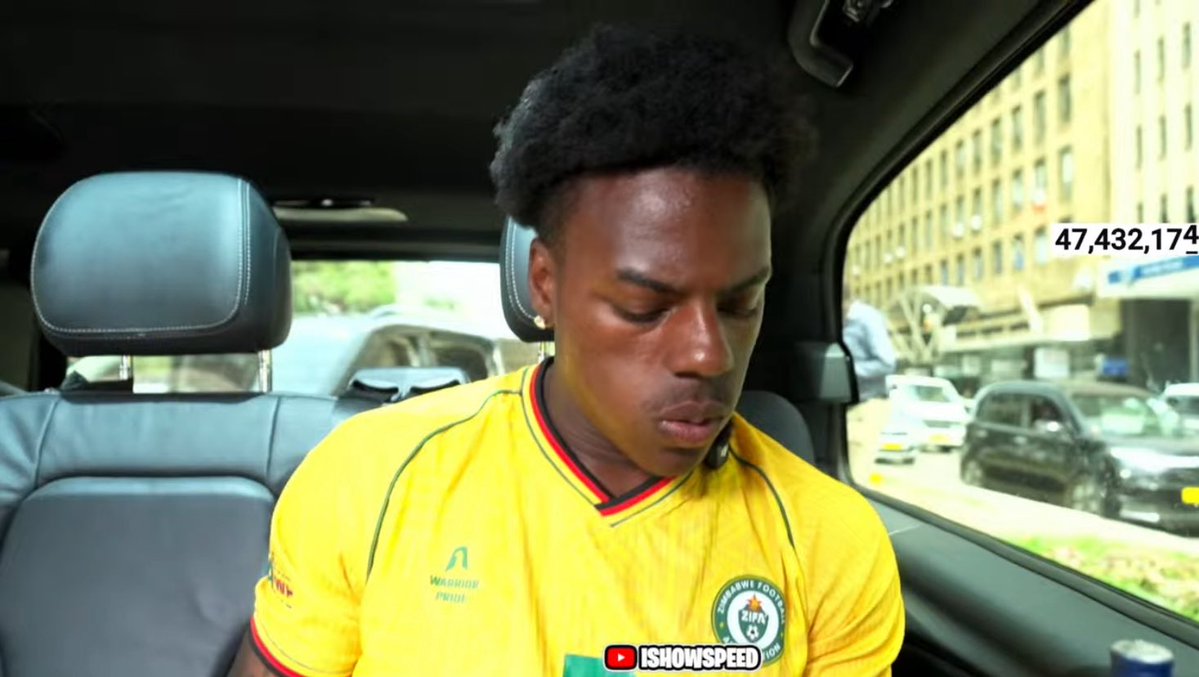
Within minutes, American YouTube star IShowSpeed — real name Darren Jason Watkins Jr. — was walking through the streets of Harare, his trademark energy bouncing off buildings, his livestream pulling in hundreds of thousands of viewers from across the world. By midday, Zimbabwe was trending across multiple platforms.
A City Caught Off Guard
“I was at work when my phone started vibrating nonstop,” said Ruvimbo Moyo (24), a retail assistant in the CBD. “At first I thought it was a power cut update. Then I heard people shouting outside. When I stepped out, everyone was running in one direction.”
Traffic slowed to a crawl. Some shops briefly closed as workers rushed out to catch a glimpse. Teenagers climbed onto pavements and balconies, phones held high, hoping to appear on the livestream.
“I’ve seen politicians come here and not draw this crowd,” laughed Blessing Chikomo, a kombi driver parked near First Street. “This boy just walks, and Harare freezes.”
From Screens to Streets
For many Zimbabwean youths, Speed was not a stranger. His chaotic humour, football fandom, and unpredictable challenges have made him a familiar face on phones and laptops.
“Speed feels like one of us,” said Tanaka Ncube (19), an upper 6 student who skipped lectures to follow the crowd. “He doesn’t act superior. He shouts, he runs, he laughs. That’s why people connect with him.”
As Speed interacted with fans — racing locals, joking with vendors, and reacting loudly to everything from street food to architecture — the livestream offered something rare: an unfiltered, unscripted look at Harare.
Culture on Display
At the Mbuya Nehanda statue, the mood shifted briefly from chaos to reflection. Traditional music played as Speed listened, visibly curious. Bones were thrown by a local female traditional healer who told Speed that he will marry one day and his future was so bright.
“I liked that moment,” said Sekuru Mandizvidza (61), who had come to watch from a distance. “For once, people outside Africa saw our history, not just jokes or poverty stories.”
Speed’s reactions — wide-eyed curiosity mixed with respect — resonated with many viewers back home.
“He didn’t pretend to know everything,” noted Farai Dube, a local content creator. “He asked questions. That matters.”
Pride, But Also Debate
Not everyone was swept up in the excitement. Some residents questioned whether the chaos disrupted daily life too much.
“Yes, it was exciting,” said Memory Chisango (34), an accountant. “But businesses lost hours. We must ask ourselves how to balance entertainment with order.”
Online, debates followed. Some praised Zimbabwe’s warmth and hospitality; others criticised the crowds for lacking crowd control. Still, many agreed on one thing: Zimbabwe was seen.
“For once, people weren’t asking if we have roads or internet,” said Tapiwa Muchenje, a digital marketer. “They saw us laughing, running, speaking English and Shona, being normal.”
Beyond Harare
Outside the capital, the livestream was watched in townships, rural areas, and university hostels.
“We gathered around one phone at the shops,” said Nomsa Dlamini from Bulawayo. “Even though he didn’t come here, it felt like Zimbabwe was hosting the world.”
In Mutare, high-school student Brian Zimhondi said the visit inspired him. “I want to be a content creator now. If someone can show our country to millions using just a camera, why not us?”
A Digital Turning Point
Experts say Speed’s visit highlights the growing influence of digital creators as informal ambassadors.
“This was soft power in real time,” explained media analyst Dr. Kudzai Mapfumo. “No script, no ministry budget — yet millions saw Zimbabwe through a human lens.”
Speed himself summed it up simply near the end of his stream:
“Zimbabwe got energy, man. Real energy.”
After the Crowd Dispersed
By evening, Harare slowly returned to normal. Streets cleared. Vendors reopened. The chants faded. But online, clips continued circulating — Zimbabweans laughing, racing, singing, and shouting into a global feed.
“I’ll tell my kids I was there,” said Tendai Moyo, smiling as he scrolled through replays. “Not because of Speed alone — but because the world saw us as we are.”
For a few loud, chaotic, unforgettable hours, Zimbabwe wasn’t just a country on the map.
It was the main character.