


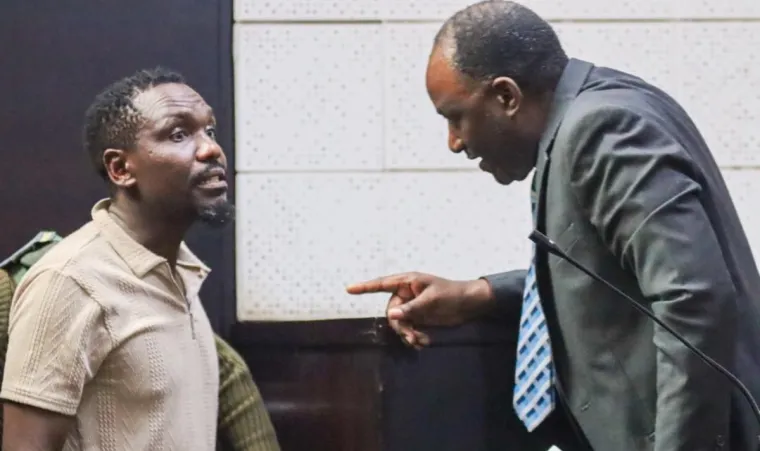
Harare – In a cramped magistrates’ courtroom, the case of Alpha Media Holdings senior journalist Blessed Mhlanga has become a flashpoint for a broader debate about press freedom in Zimbabwe. The charge – transmitting messages “likely to incite public violence” – stems from two press conferences held by war‑veteran and outspoken critic Blessed “Bombshell” Geza, which Mhlanga covered and broadcast on HStv. The State alleges that the journalist provided the platform for Geza’s calls to oust President Emmerson Mnangagwa, a claim that defence lawyers say is a thinly veiled attempt to punish independent reporting.
The prosecution’s star witness, CID Law and Order officer Edmore Nyadzamba, told the court that Mhlanga not only recorded Geza’s incendiary remarks but also “engaged” with the veteran, allegedly handing over equipment to amplify the message. Under cross‑examination, Nyadzamba admitted that police failed to execute a search warrant and could not locate the exact venue of the alleged offence. Defence counsel Chris Mhike seized on the inconsistency, arguing that the State’s case rests on a “scripted” narrative that does not match the officer’s own cautioned statement. “The witness is being asked to read from a script while on the stand,” Mhike told Magistrate Sheunesu Matova, adding that Mhlanga was merely doing his job as protected by the Constitution.
The trial has drawn attention beyond the courtroom. Media rights groups warn that the prosecution of a journalist for simply reporting on a public figure sets a dangerous precedent. “When the state criminalises the act of broadcasting a press conference, it effectively places a gag on the media,” said Beatrice Mtetwa, one of Mhlanga’s defence attorneys. “The question is not whether Geza’s remarks are inflammatory, but whether the press should be free to report them without fear of prosecution.”
Conversely, the State maintains that the law must balance national security with free expression. Prosecutor Whisper Mabhaudhi argued that the alleged broadcast crossed the line from reporting into incitement, a distinction that legal analysts say is often blurry in practice. The case has also highlighted procedural irregularities: the police’s inability to produce a valid search warrant, the witness’s claim of forgotten spectacles, and the absence of any documentary evidence linking Mhlanga directly to the alleged incitement.
As the hearing resumes, the outcome will be scrutinised not only for its legal implications but for its broader signal to Zimbabwe’s journalists. If convicted, Mhlanga could face a prison term that would add to a growing list of cases where media workers have been detained for performing their duties. If acquitted, the verdict may offer a modest reprieve, affirming that reporting on controversial figures does not automatically constitute a criminal act.
For now, the courtroom remains a theatre of competing narratives: a state seeking to protect public order versus a press asserting its right to inform. The verdict, whenever it comes, will reverberate through newsrooms across the country, shaping the delicate balance between authority and accountability in Zimbabwe’s media landscape.