


By Simbarashe Namusi
As schools open across Zimbabwe this week, one ritual repeats itself quietly in households from Highfield to Honde Valley. Parents tick off uniforms, fees, stationery — and then comes the heaviest item on the list: textbooks.
Some head to formal bookshops. Others to street vendors. Many to photocopy centres. Few stop to question how this became normal.
The requirement for parents to buy textbooks for children in public schools has been normalised. Not legislated. Not formally debated. Simply accepted. And in that quiet acceptance lies a growing crisis — not only of access, but of quality, integrity, and equity in the education system.
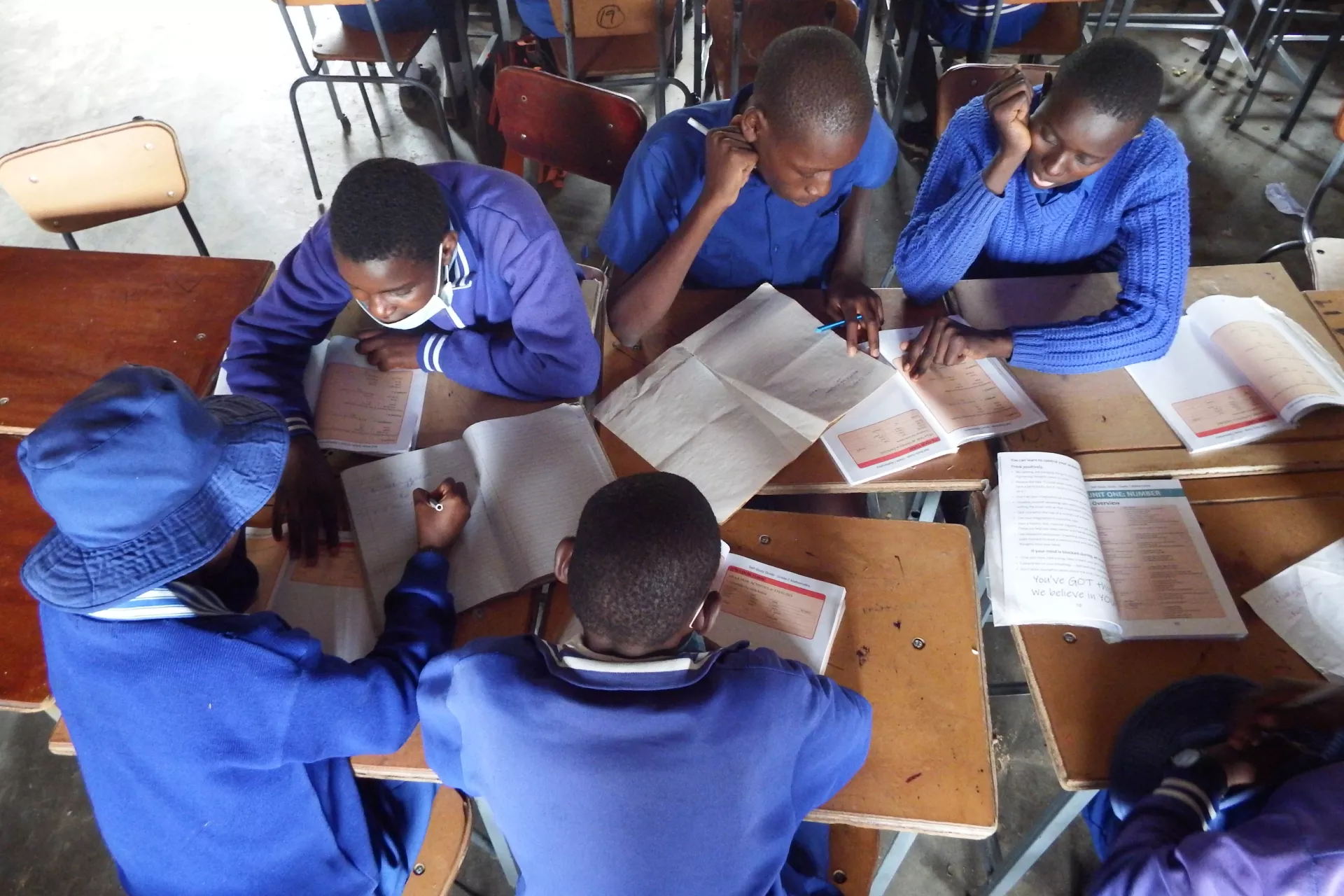
There was a time when textbooks in Zimbabwean public schools were treated as a shared public good. They were scarce and often outdated, but they were institutionally owned. Pupils inherited dog-eared copies from older cohorts; schools rationed them carefully; teachers improvised around shortages.
The assumption was clear: learning materials were a state responsibility.
That assumption has been reversed — not through policy reform, but through economic pressure.
As the state’s capacity to procure learning materials has weakened, the burden has been transferred downwards. First to School Development Committees, then to parents, and now to the informal market. What began as a stopgap has hardened into expectation.
Today, a child without personally owned textbooks is treated as unprepared — sometimes even negligent — a moral judgement placed on families rather than on the system.
The most visible consequence has been the explosion of pirated textbooks.
Across urban and rural centres alike, photocopied versions of prescribed texts circulate freely. In Harare, a single new secondary-school textbook can cost the equivalent of a family’s weekly grocery budget. For many households juggling fees, uniforms, transport and exam levies, the choice is not between legal and illegal copies. It is between something and nothing.
Piracy, in this context, is not criminality. It is adaptation.
But adaptation carries costs.
Quality is the first casualty. Photocopied books fade. Diagrams disappear. Pages fall out. Teachers spend time compensating for missing material instead of teaching it. Learning becomes uneven — not because pupils lack ability, but because their tools are unreliable.
Inequality deepens next. Children from wealthier families arrive with pristine, up-to-date editions. Others share tattered photocopies or rely entirely on limited classroom access. In a system already strained, textbooks become another axis of stratification — a quiet divider between those who can afford full participation and those who merely attend.
Then comes the most dangerous consequence of all: precedent.
When parents quietly assume responsibility for textbooks, a line is crossed. If books can be outsourced to households, why not desks? Why not chalk? Why not teacher incentives through “voluntary” top-ups? The normalisation of parental purchase is not just about learning materials. It signals a broader retreat of the state from the everyday material conditions of education.
And that retreat reshapes accountability.
When government supplies textbooks, shortages are political. They generate pressure, questions and debate. When parents buy them individually, shortages become personal problems — dispersed, privatised and depoliticised. Structural failure is reframed as household inadequacy. A mother scrambling at a photocopy shop replaces a ministry explaining itself at a press conference.
There is also a quieter economic irony at work.
Piracy undermines the very publishing ecosystem that produces the books schools depend on. When publishers lose revenue, they invest less in locally tailored curriculum materials. Over time, schools are pushed towards foreign texts misaligned with Zimbabwe’s syllabi. The system saves money today only to pay in relevance tomorrow.
None of this is to romanticise the past. Zimbabwe’s education sector faces real fiscal constraints. But constraint does not require silent abdication. It requires honest policy choices.
If parents are to be formally responsible for textbooks, that reality should be codified, regulated and supported — through subsidies, bulk procurement schemes and protection against exploitative pricing. If the state remains committed to textbook provision, then that commitment must be visible in budgets and supply chains, not merely in speeches.
What cannot continue is the current grey zone — where responsibility is shifted without being acknowledged, and consequences are absorbed without being addressed.
Because when textbooks become a private burden in a public system, education stops being a shared national project.
It becomes a market transaction. And markets, left alone, do not care about fairness. They care about ability to pay.
Zimbabwe’s greatest post-independence achievement was the democratisation of education — the belief that a child’s prospects should not be determined by the depth of a parent’s pocket. The quiet normalisation of parental textbook purchase erodes that legacy, page by page, photocopy by photocopy.
As classrooms reopen this term, the question is not whether parents will once again rise to the challenge. They always do. The question is whether the system will continue to treat their sacrifice as policy — or finally confront the cost of turning a public good into a private burden.
Simbarashe Namusi is a peace, leadership and governance scholar as well as media expert. He writes in his personal capacity.