


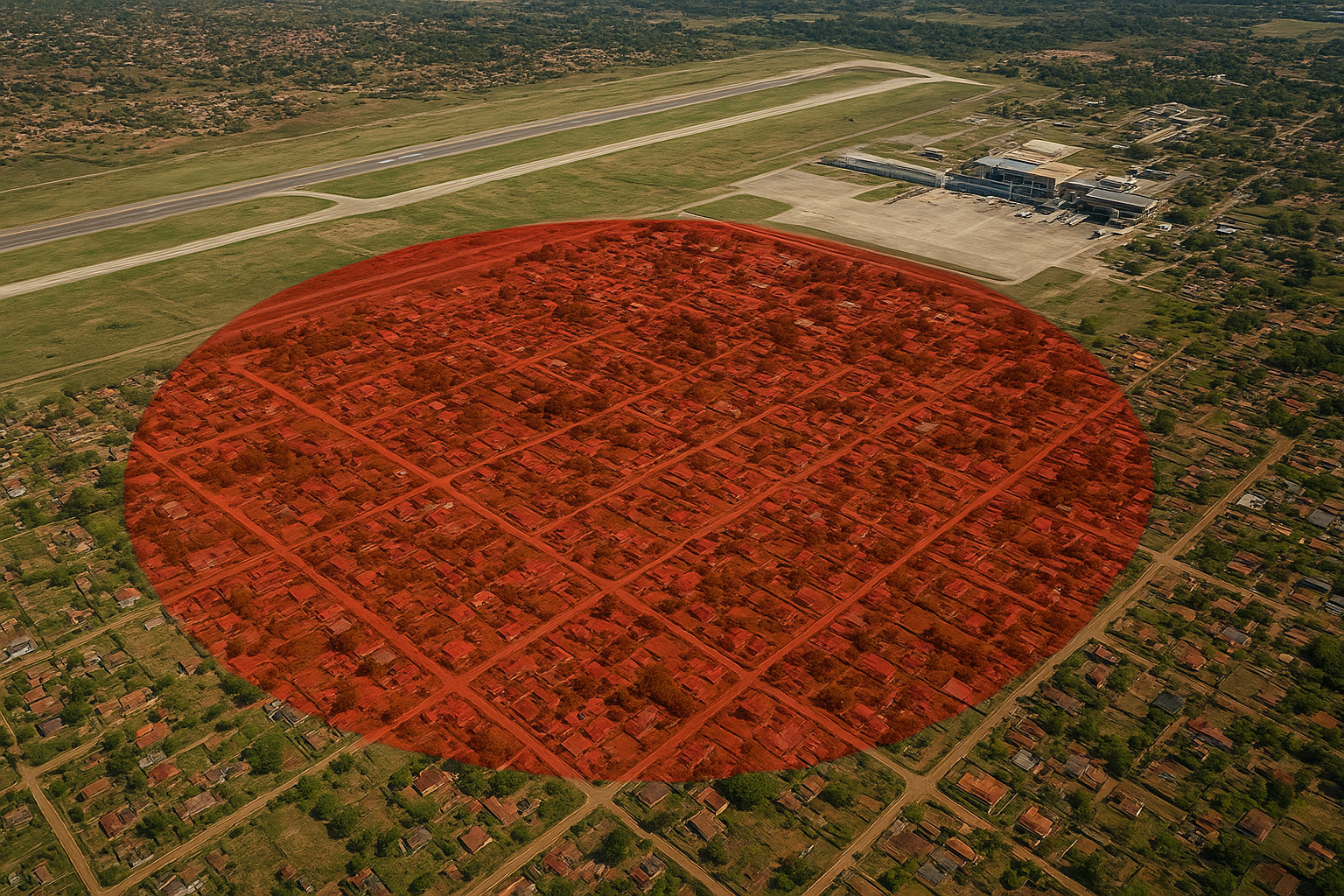
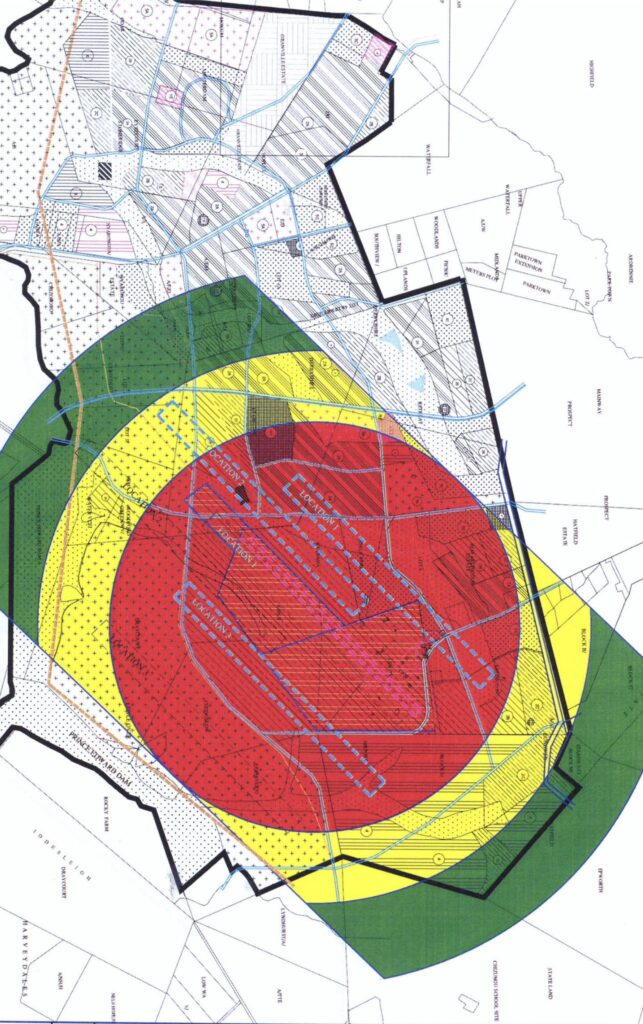
A wave of large-scale evictions is looming around Robert Gabriel Mugabe International Airport as the Airports Company of Zimbabwe (ACZ) moves to clear all settlements located within the airport’s officially designated Red Zone, an area that includes the rapidly developing Arlington Estate and several surrounding farms and residential plots. In a formal public notice, ACZ announced that it is beginning work on a major expansion programme that will introduce a secondary runway, a new cargo terminal, and various aeronautical support facilities, all of which will occupy land currently settled by thousands of families. The zoning map released by authorities shows a wide red circular radius covering most of Arlington and nearby occupations, indicating a strict no-settlement aviation buffer required for runway safety, aircraft manoeuvring space, and compliance with international aviation regulations.
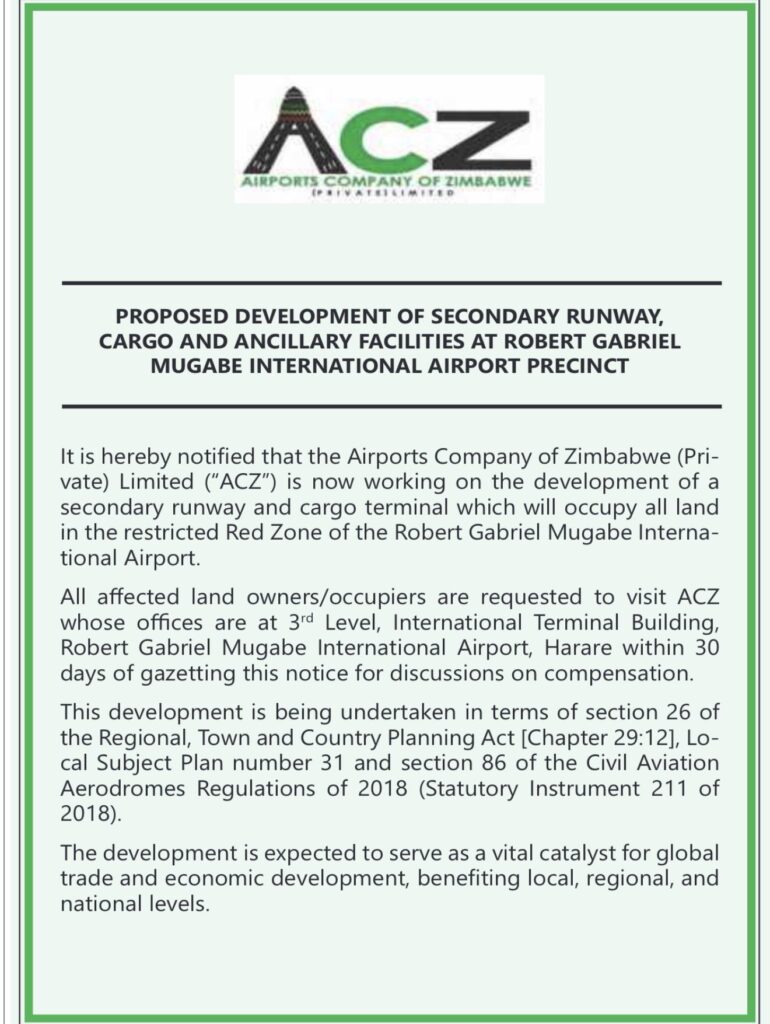
ACZ has instructed all affected landowners and occupiers to report to its offices at the airport within 30 days to begin discussions on compensation, citing powers provided under the Regional, Town and Country Planning Act and the Civil Aviation Aerodromes Regulations of 2018. Many residents, however, appear to have been caught off-guard, with some having purchased or developed land over the years without being made aware that the area fell inside a protected aviation zone. The announcement has therefore triggered widespread uncertainty, as homeowners, informal settlers and small-scale farmers now face the possibility of losing homes, businesses and long-term investments to make way for aviation infrastructure.
Authorities argue that the airport expansion is essential for transforming Zimbabwe into a regional logistics hub by boosting trade, modernising cargo movement and improving international flight handling capacity. While the ACZ notice emphasises economic benefits, it offers limited clarity on the relocation process, timelines, or the nature of compensation that different categories of landholders can expect. With large parts of the affected area already fully built-up, the scale of clearance required could result in one of the most extensive urban displacements around Harare in recent decades.
As the 30-day window for consultations begins, residents and civic groups are expected to push for transparency, fair compensation and clearer planning information, while authorities proceed with preparations for the new runway and cargo precinct. The coming period is likely to shape how Zimbabwe balances infrastructure expansion with the rights and livelihoods of communities settled around the capital’s main airport, where uncertainty now hangs heavily as the prospect of mass evictions becomes increasingly real.