


By Simbarashe Namusi
When the City of Harare adopted the ambition of becoming a “world class city by 2025”, the slogan was not modest. It promised a capital defined by efficient services, modern infrastructure, responsive governance, and a high quality of life for residents. The year has now passed. Harare remains standing — vibrant, crowded, resilient — but also visibly unfinished. The question for 2026 is not whether the vision failed outright, but what survives of it, and what must change if city governance is to regain credibility.
To be fair, Harare’s challenges were never simple. Rapid urbanisation has outpaced planning for decades.
Population growth, informal settlements, and economic volatility have placed sustained pressure on water, waste management, roads, and housing. Any honest assessment must acknowledge that the city has been operating under structural constraints that go beyond local authority control. Limited revenue bases, currency instability, and tensions between central and local government have all shaped outcomes.
Yet vision statements exist precisely to rise above excuses.
By 2025, residents expected tangible markers of progress. Instead, service delivery remains uneven at best. Water supply is unreliable across large parts of the city. Burst pipes, antiquated treatment plants, and contamination risks have become recurring features of urban life rather than temporary crises. Waste collection, while sporadically improved in some neighbourhoods, continues to lag behind demand, with illegal dumpsites now a defining part of Harare’s landscape.
Governance is where the gap between ambition and reality feels widest. The promise of a “world class city” implied professionalism, transparency, and accountability. In practice, Harare’s administration has struggled to project coherence and trust. Frequent clashes between elected councillors, technocrats, and national authorities have blurred lines of responsibility. Residents are often left unsure who is accountable for failures — a recipe for public frustration and disengagement.
That said, it would be inaccurate to paint the city as entirely stagnant. There have been incremental gains. Digital payment systems for rates and services have expanded, improving convenience and reducing some opportunities for petty corruption. Road rehabilitation, though patchy, has improved key arteries.
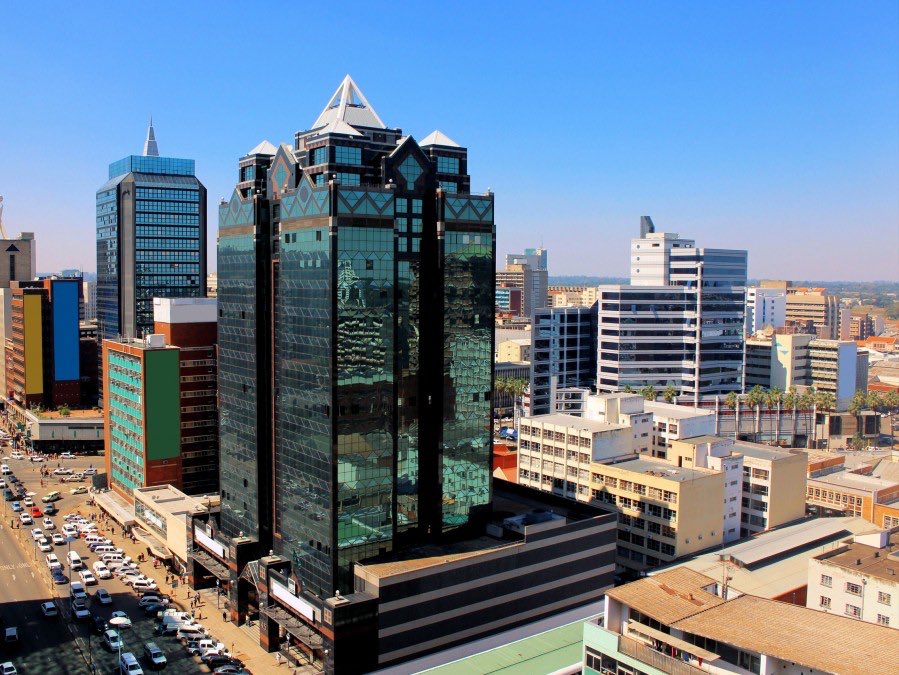
Private developers, often stepping in where public capacity is thin, have reshaped parts of the city’s skyline with mixed-use developments, malls, and gated communities. These changes suggest that progress is possible — but uneven and exclusionary.
The deeper issue is that Harare’s governance model still feels reactive rather than strategic. A world class city is not built through isolated projects, but through integrated planning.
Transport, housing, water, land use, and economic development must speak to each other. Instead, policy decisions often appear short-term, driven by crisis management or political calculations rather than long-range urban thinking. Informality, for example, is treated as a problem to be cleared rather than a reality to be planned around and upgraded.
As 2026 unfolds, Harare faces a choice. One option is to quietly retire the “world class city” slogan and replace it with lower expectations. The other — more difficult but more honest — is to recalibrate the vision. This means setting measurable, realistic targets and communicating them transparently to residents. It also requires strengthening institutional capacity at the City of Harare, insulating technical decisions from political turbulence, and restoring public confidence through consistent delivery, not rhetoric.
Ultimately, Harare does not need another slogan. It needs governance that works incrementally, visibly, and fairly.
Becoming “world class” was always an aspirational endpoint, not a deadline. The failure was not in aiming high, but in underestimating the discipline, accountability, and coordination required to get there.
In 2026, the task is simpler, if less glamorous: fix the basics, rebuild trust, and let ambition follow performance — not the other way around.
Simbarashe Namusi is a peace, leadership and governance scholar as well as media expert. He writes in his personal capacity.