


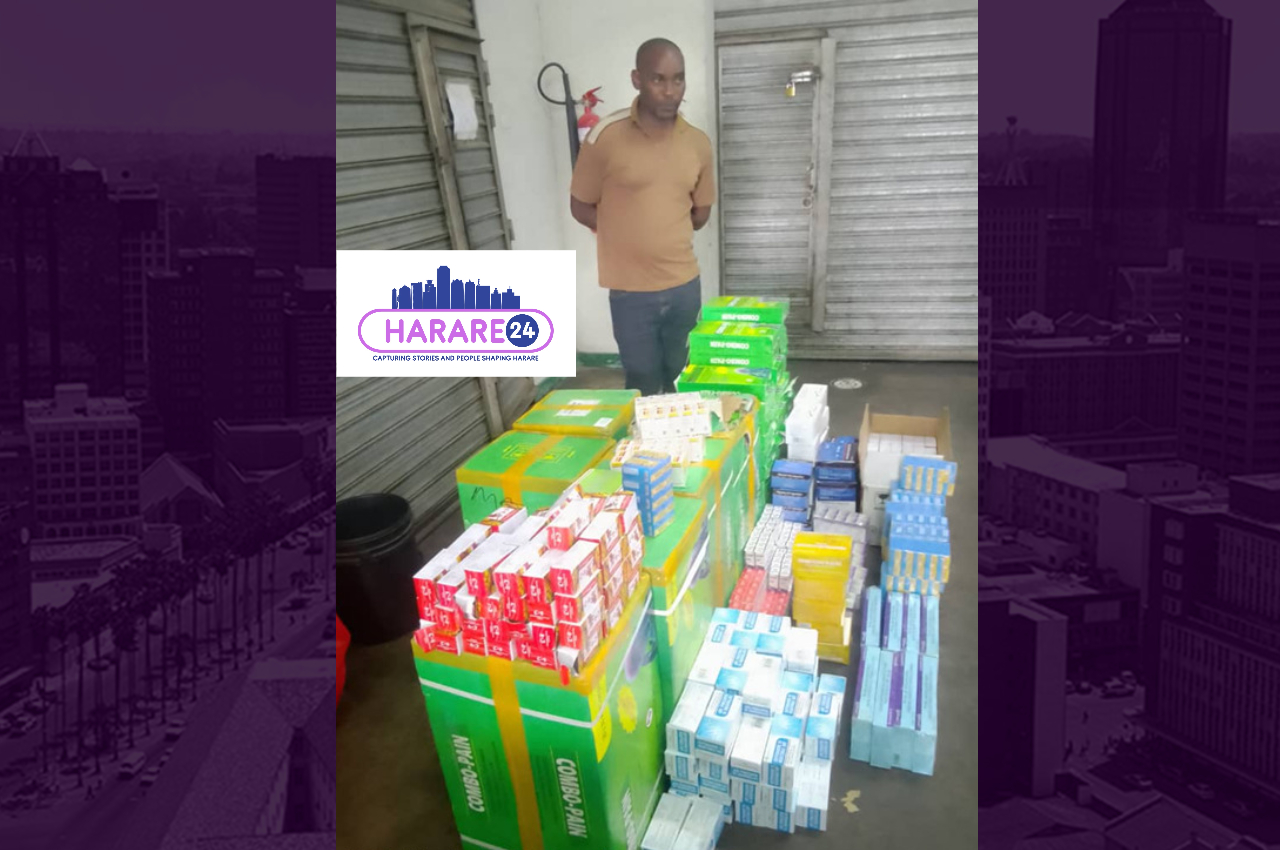
Police in Chirundu intercepted a tanker truck at the 336-kilometre peg along the Harare–Chirundu Road on 14 November 2025 and arrested the driver, identified as 48-year-old Elisha Nemaungwe, in connection with the smuggling of pharmaceutical products, according to various media sources and police social-media posts. Officers recovered a stash of tablets and injections reportedly destined for illegal diversion into informal markets; the haul is said to include 158 packs of X50 x 10 Combo Pain tablets, 225 packs of C4 tablets packaged as 10 x 10, 70 vials of 20 ml lidocaine injections and five 100-ml ampoules of diclofenac injections.
The interception took place on the R3 corridor — the strategic Harare–Chirundu highway that links Zimbabwe with Zambia and forms part of an important regional trade route — an axis frequently used by commercial carriers and, at times, by syndicates attempting to move contraband over long distances. Police checkpoints along the route have in recent months targeted illicit consignments and smuggling networks, and this latest seizure follows several similar busts earlier in the year in which truck drivers were found carrying unlicensed or diverted medical products.
Smuggling of legitimate medicines into the informal economy is a recognised public-health threat because diverted or counterfeit products can end up in unregulated supply chains, undermining patient safety and fuelling antimicrobial resistance. The World Health Organization and international agencies warn that substandard, falsified or diverted medical products harm patients, waste scarce resources and erode trust in health systems — problems that are especially acute in lower- and middle-income countries where regulatory oversight can be patchy. Experts say seizures such as the one in Chirundu, while necessary, reflect a wider challenge across the region.
Local reporting indicates that officers photographed and catalogued the recovered medicines before removing them for forensic verification. Authorities have not publicly released further details about the driver’s alleged route, the consignor, or whether the medicines were counterfeit, unregistered or diverted from public health stocks. Insiders and civic-watch outlets reporting from the scene say police expect to open a formal criminal investigation that could include tracing the supply chain and identifying buyers operating in urban informal markets.
The arrested driver’s case now appears to be in the hands of local prosecutors; if charged and convicted under Zimbabwe’s laws covering the illicit distribution of medicines and contraband goods he could face hefty fines and custodial sentences, depending on whether investigators prove links to organised trafficking or diversion from healthcare facilities. In previous cases this year, similar arrests have prompted follow-up probes into hospital inventories and supplier records as authorities seek to determine whether theft or corruption in legitimate supply chains contributed to the flow of stock into illegal channels.
Community health advocates and anti-counterfeit campaigners say seizures should be paired with stronger regulatory action, public awareness and cross-border cooperation. They point to international research showing that up to one in ten medical products in developing-country markets may be substandard or falsified, with serious consequences for patient outcomes and for efforts to control infectious diseases. Observers also urge a focus on prosecuting organisers of smuggling rings and tightening controls at wholesale and distribution levels to stop medicines from being siphoned off and sold on the black market.