


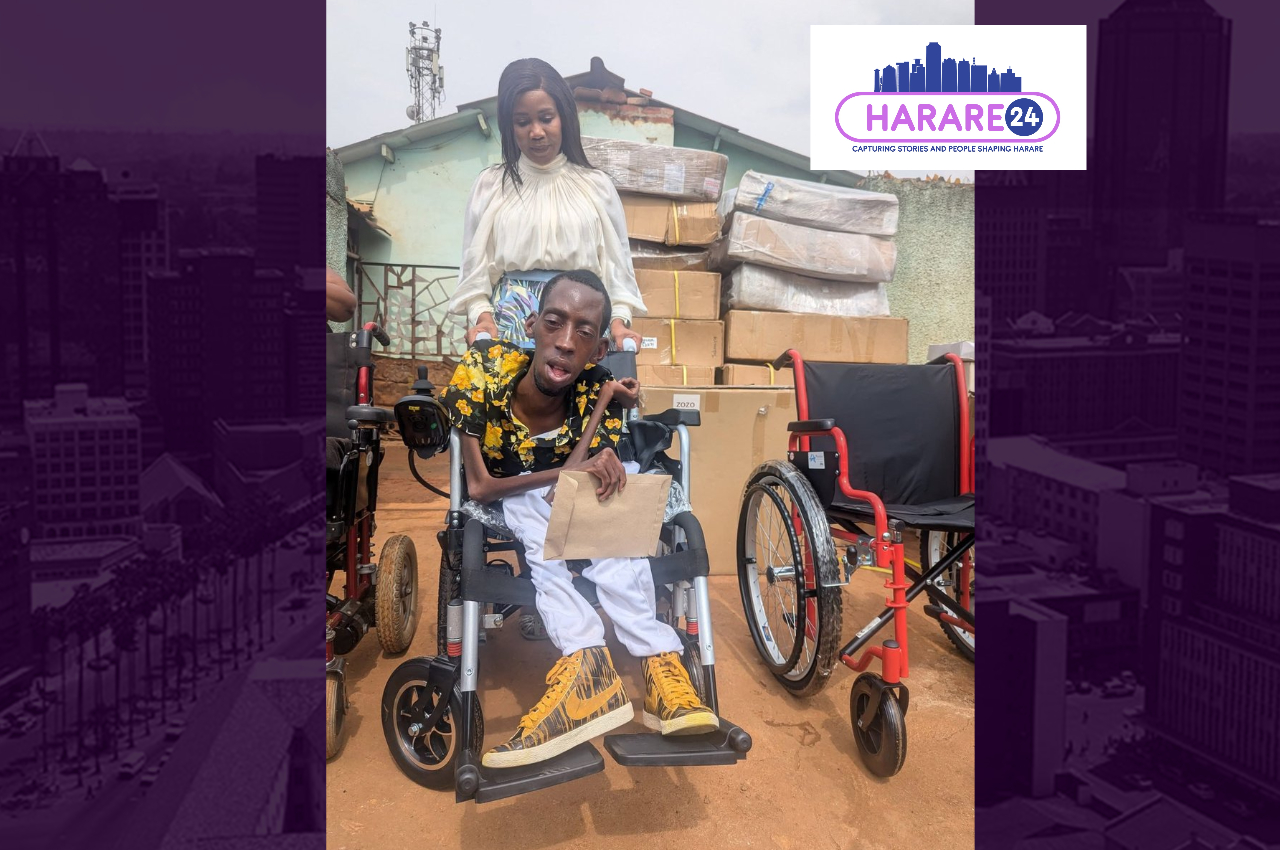
Renowned Zimbabwean musician Tongai “Greatman” Gwaze has received a major boost for his wheelchair-donation drive after Minnie Baloyi-Chiwenga wife of Vice-President Constantino Chiwenga fulfilled a pledge to support the initiative. Baloyi-Chiwenga handed over 20 brand-new wheelchairs and US$2,000 to the Greatman Foundation, a contribution Greatman says will expand the campaign’s reach into crowded urban townships where mobility aids are scarce.
Greatman launched the appeal as part of a broader initiative often called #MakumboKuvanhu (roughly “wheels to the people”) — which aims to supply wheelchairs, run mobile fitting clinics and deliver transport assistance for people with mobility impairments across Zimbabwe. The entertainer has been publicly campaigning for months, using social media to call on celebrities, businesspeople and the public to chip in after citizens and diaspora contributors previously helped buy him a wheelchair-friendly vehicle.
According to posts and videos shared online, Greatman first approached Baloyi-Chiwenga by message and was asked to submit a formal request to her office. The Second Lady responded, and has now delivered on that commitment by donating the wheelchairs and cash the latter earmarked for fuel and logistics to move the devices to beneficiaries located in high-need areas. Greatman and his team described the donation as timely and transformational for the foundation’s distribution plans.
Greatman said the new wheelchairs will allow the foundation to reach dozens more households that currently rely on improvised mobility solutions or simply remain housebound. Wheelchairs are more than convenience items in many Zimbabwean communities: they restore dignity, allow access to markets, clinics and schools, and reduce the care burden on family members. Advocacy groups and health data point to a significant population with functional difficulties in Zimbabwe, and campaigns that supply mobility aids fill an acute gap left by limited state provision.
Greatman’s #MakumboKuvanhu drive has attracted other celebrity support in recent months for example comedian-entrepreneur Madam Boss publicly donated funds for two wheelchairs and grassroots donors earlier helped buy him a wheelchair-friendly car. At the same time the campaign has not been without controversy: some social-media debates have arisen over the wording of public appeals and the way celebrity endorsements are solicited, prompting the musician to clarify his intentions and defend the project’s sincere humanitarian aims.
High-profile donations like Baloyi-Chiwenga’s serve several purposes beyond the immediate value of wheelchairs and fuel. They raise public awareness, unlock access to official channels for distribution and vetting, and often encourage smaller donors or civic groups to follow suit. For a campaign that depends on logistics (transport, fitting, beneficiary verification), an injection of both cash and equipment removes practical bottlenecks and speeds delivery to the most vulnerable. Greatman’s team says the funds will be used to move the wheelchairs quickly, while beneficiary selection will be handled with partner organisations to ensure transparency.
The Greatman Foundation has said it will prioritise distributions in high-density suburbs and rural outreach clinics where assessment and fitting can be done. Disability advocates continue to push for stronger state programmes to address long-term needs including repair services, assistive-technology training and inclusive transport but in the short term grassroots drives like Greatman’s provide urgently needed assistance to individuals who would otherwise wait years for help.
Responses to the donation have been broadly positive across social platforms, where many users thanked Baloyi-Chiwenga and hailed Greatman for using his platform to mobilise support. Disability-rights groups have welcomed the contribution while reiterating a call for sustained, systemic investment in assistive devices across Zimbabwe. National surveys and UN-affiliated reports note differing estimates for prevalence of disability, but agree that access to assistive technology remains limited a gap that civil-society efforts are stepping in to narrow.