


By Simbarashe Namusi
Harare City Council’s instruction for residents with “nothing to do in town” to leave the CBD before dark should alarm every Zimbabwean — not because of the rain, but because of what the warning really admits: the capital city is no longer able to protect its own people.
This is not a public safety advisory.
It is a confession of institutional collapse.
A functioning city does not tell citizens to vacate its economic heart because drains cannot cope with rainfall. A functioning city fixes its drains, protects its wetlands, manages its traffic, and plans for seasonal weather. What Harare has done instead is normalise failure — and then outsource responsibility to the public.
From weather event to governance crisis
Heavy rains are not an act of God in January. They are a certainty. Every year, they come — predictably and relentlessly. The difference between a flood and a nuisance is not rainfall; it is preparation.
Yet Harare continues to treat rain like an emergency instead of a season.
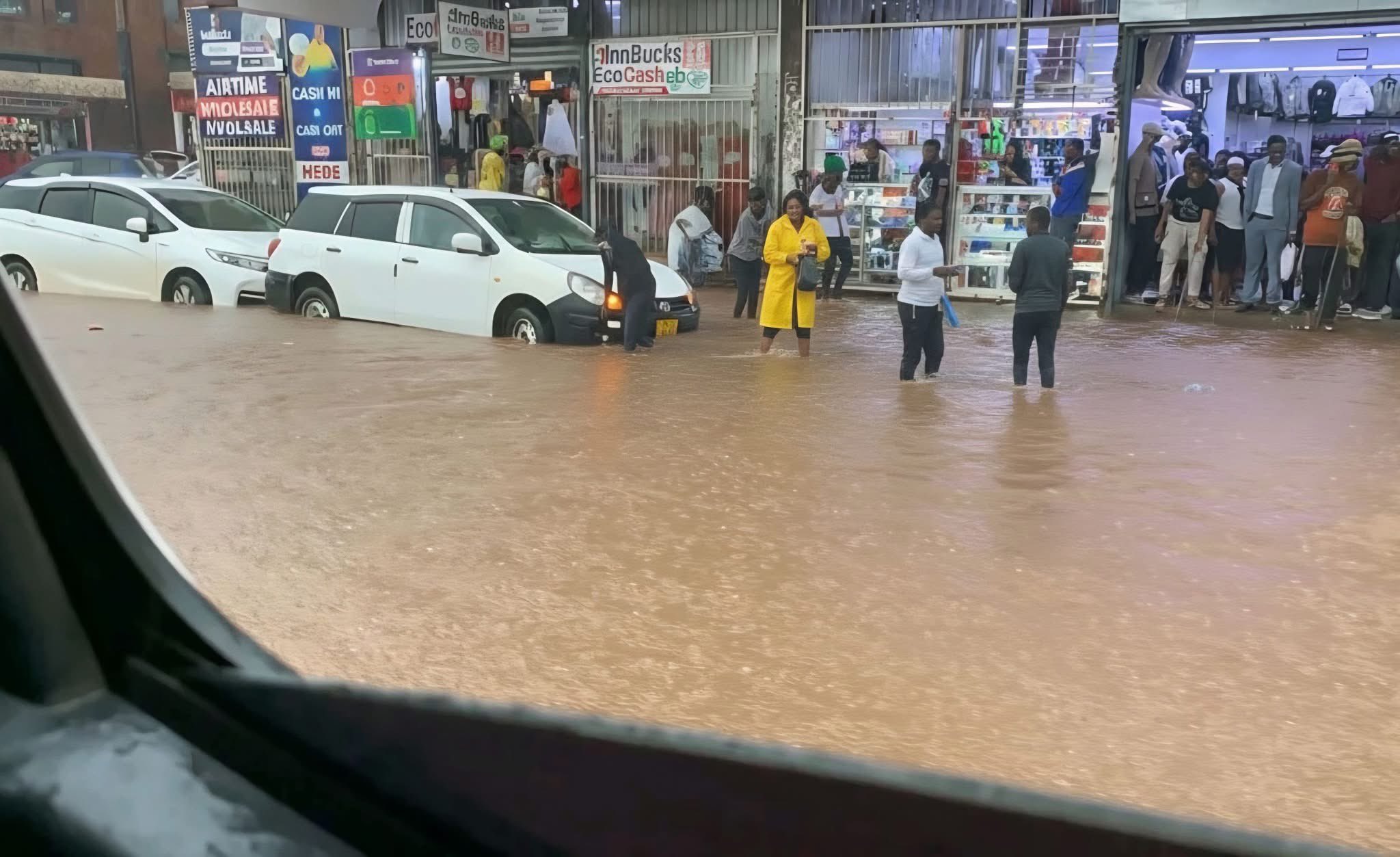
Blocked drains, collapsed culverts, silted waterways and unprotected wetlands have turned ordinary showers into disasters. Roads become rivers. Pavements vanish under muddy torrents. Vehicles stall. Pedestrians wade through sewage-laced water. And now the official solution is simple: don’t be here when it happens.
That is not urban management. That is urban surrender.
“Nothing to do in town” — the language of exclusion
Perhaps the most disturbing part of the directive is its tone.
Who decides who has “nothing to do” in town?
In a city where thousands survive through vending, piece jobs, informal trading and daily hustling, the CBD is not a luxury space. It is a workplace. It is survival territory. Telling people to leave is not a safety measure — it is a quiet criminalisation of poverty.
Middle-class commuters can retreat to cars and homes before dark. Informal workers cannot. They wait for customers. They chase the last sale. They count every dollar. And when floods strike, they are the ones trapped in underpasses, stranded at bus termini, soaked and exposed — while officials issue press statements from dry offices.
A city built on destroyed wetlands
Harare’s flooding is not natural. It is engineered.
Wetlands that once absorbed excess water have been parceled into housing stands. Streams have been built over. Drainage channels have become dumping sites. Plastic waste, rubble and sewage choke the very systems meant to protect the city.
This is what happens when urban planning is sacrificed to short-term profit and political convenience.
Every flooded street today is a monument to a wetland sold yesterday.
And the cost is now being paid by residents who are told to “leave town” instead of being protected in it.
Traffic chaos as a permanent condition
Flooding does not only endanger lives — it paralyses the economy.
Each downpour brings gridlock. Kombis abandon routes. Private cars clog main arteries. Emergency services struggle to move. Workers arrive late or not at all. Productivity bleeds out of the city, one storm at a time.
Harare has reached a point where rainfall dictates the working day. That is not weather vulnerability — it is infrastructural fragility bordering on dysfunction.
The politics of managing decline
What makes this moment particularly damning is not that the city is struggling — many cities do. It is that the struggle has been normalised, explained away, and quietly managed instead of confronted.
Warnings replace repairs. Statements replace systems. Advisories replace accountability.
And slowly, the public is trained to lower expectations.
Today, we are told to leave the CBD before dark. Tomorrow, perhaps we will be told not to expect water during droughts, electricity during storms, or roads during rainy seasons. At some point, citizens stop asking for services and start asking only for survival.
That is how cities decay — not through sudden collapse, but through managed decline.
A city that works should not need apologies
Harare does not need more warnings. It needs leadership.
Leadership that treats drainage not as a seasonal issue but as a core service. Leadership that protects wetlands as infrastructure, not spare land. Leadership that understands that safety is built, not announced.
Until then, every flood warning will sound less like concern and more like surrender.
Because when a city tells its people to go home to avoid its failures, the real disaster is no longer the rain — it is the governance.
Simbarashe Namusi is a peace, leadership and governance scholar as well as media expert. He writes in his personal capacity