


By Simbarashe Namusi
In three days, the intersection of Robert Mugabe Road and Sir Seretse Khama Street has produced two brutal reminders of how cheaply life is treated in our city: one pedestrian dead, another injured by a vehicle fleeing traffic authorities.
We call these “accidents.” They are not. They are outcomes.
What has happened at that junction is not misfortune. It is the predictable result of official neglect, selective enforcement and a culture that tolerates disorder until blood is spilled.
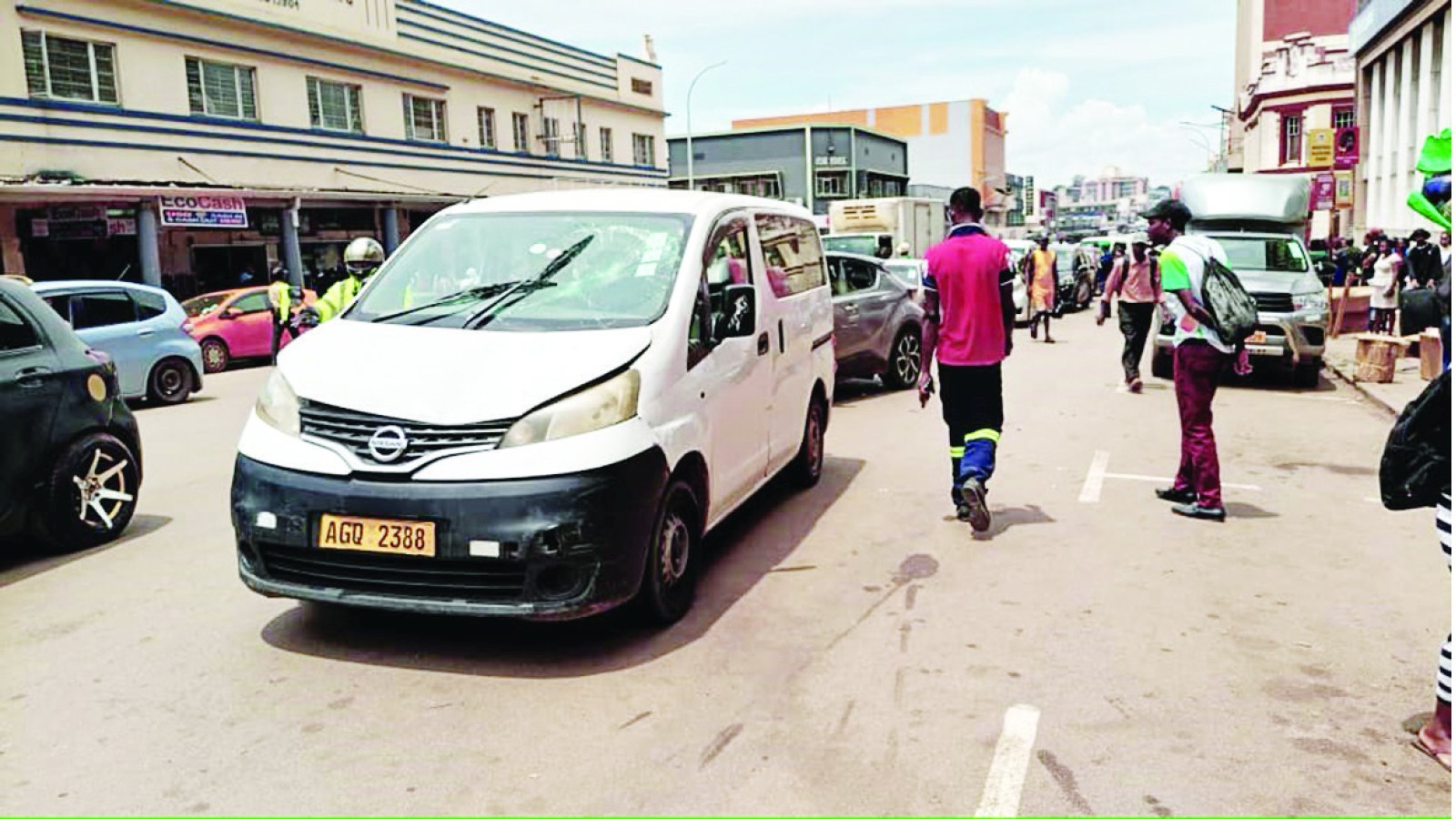
For months, commuter omnibus operators have quietly turned the intersection into an illegal rank. Vehicles stop where they please. Passengers board in live traffic. Drivers make sudden turns, abrupt accelerations, reckless escapes. And all this unfolds a stone’s throw from Harare Central Police Station — in full view of authority.
That alone should disturb us.
Because when illegality becomes routine in such proximity to power, the issue is no longer about kombis. It is about consent.
Someone, somewhere, has decided that chaos is acceptable — until it kills.
When enforcement becomes part of the danger
City traffic policing has drifted into a dangerous logic: punish without fixing. Clamp without planning. Chase without controlling.
The result is perverse. Drivers flee. Pedestrians scatter. Streets turn into obstacle courses. The recent incident in which a pedestrian was knocked down by a vehicle escaping traffic officers is not an aberration. It is the logical consequence of enforcement that prioritises revenue over regulation, fines over flow, punishment over prevention.
In this system, danger is not corrected. It is managed — until it explodes.
Disorder kills before speed does.
We often speak of speeding as the main killer on our roads. But in Harare today, disorder is deadlier than speed.
At that intersection, the risk is not just how fast cars move. It is how unpredictably they move. Kombis stop without warning. Cars surge suddenly to avoid fines. Crowds spill into the road. No one knows who has right of way — because in practice, no one does.
This is not a traffic problem. It is a governance problem.
When rules exist only on paper and enforcement exists only in bursts, chaos becomes the operating system of the street. And chaos, sooner or later, claims lives.
Everyone shares the blame — but not equally
Yes, kombi operators behave recklessly.
Yes, motorists take chances.
Yes, pedestrians cross dangerously.
But these behaviours thrive in an environment created by authority.
City officials have allowed an illegal rank to harden into permanence. Traffic enforcement has normalised selective policing. Urban planners have failed to align commuter demand with safe transport design.
And in that collective abdication, pedestrians — the least protected road users — are paying the highest price.
This is not complicated
The solution does not require task forces or conferences. It requires courage to do the obvious:
Remove the illegal rank — permanently.
Place traffic marshals at peak hours.
Enforce consistently, not theatrically.
Create proper, safe commuter zones nearby.
Above all, choose life over fines.
Because every day that intersection remains as it is, the city is making a silent statement: inconvenience to operators matters more than safety for pedestrians.
A moral test for the city
Cities reveal their values not in speeches, but in streets.
The intersection of Robert Mugabe Road and Sir Seretse Khama Street now stands as a moral test of Harare’s urban leadership. Will the city act after death — or only after the next one?
If nothing changes, the next headline will not shock us. We will nod, sigh, and move on. That is the final tragedy — not just that people are dying, but that we are becoming used to it.
And no city that normalises preventable death can call itself functional — let alone humane.
Simbarashe Namusi is a peace, leadership and governance scholar as well as media expert. He writes in his personal capacity.