


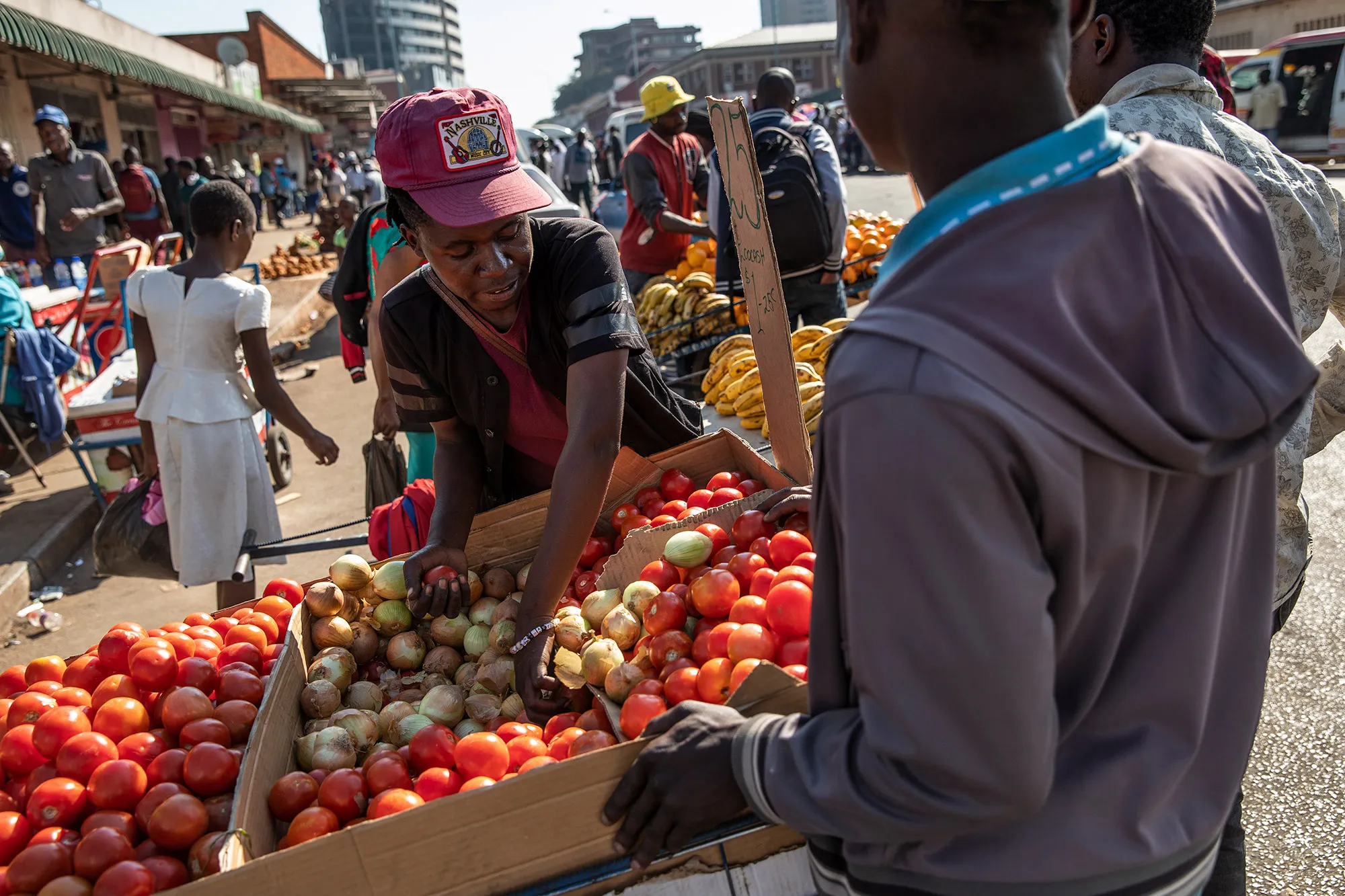
By mid-morning, Harare’s CBD is already tired.
Municipal trucks move through the streets, vendors scatter, and children who sleep in shop doorways gather their few belongings and drift elsewhere. The city exhales briefly, as if order has been restored, before slipping back into its familiar rhythm.
For many residents, this is not life as it should be. It is survival.
Survival is waking up before sunrise to secure a vending spot that may be lost by midday. It is a child learning which pavements are safer to sleep on. It is commuters budgeting every trip, every meal, every dollar.
On paper, Harare is a capital city. In practice, it is a place where people are constantly negotiating space, income, and dignity.
Operations to clear the central business district come and go. Pavements are swept, order is enforced, and the city briefly looks like itself again. But the people being moved on do not disappear. They simply relocate, carrying their struggles with them.
For vendors, the streets are not a choice but a necessity. For children living rough, the CBD offers safety in numbers and the possibility of a meal. When they are removed without lasting alternatives, the cycle quietly restarts.
And so Harare endures.
It survives through resilience, improvisation, and stubborn hope. But surviving is not the same as living.
Living would mean a city where livelihoods are planned for, not chased away. Where children have homes before they have street names. Where order is built on opportunity, not enforcement alone.
Until then, Harare will continue to wake up, sweep itself clean, and carry on. Not because it is thriving, but because it has learned how to survive.
This beautiful read is not just about Harare, the capital city; it is the heart of our lives as a nation. This very description describes all of us individually. A lifetime of struggle.